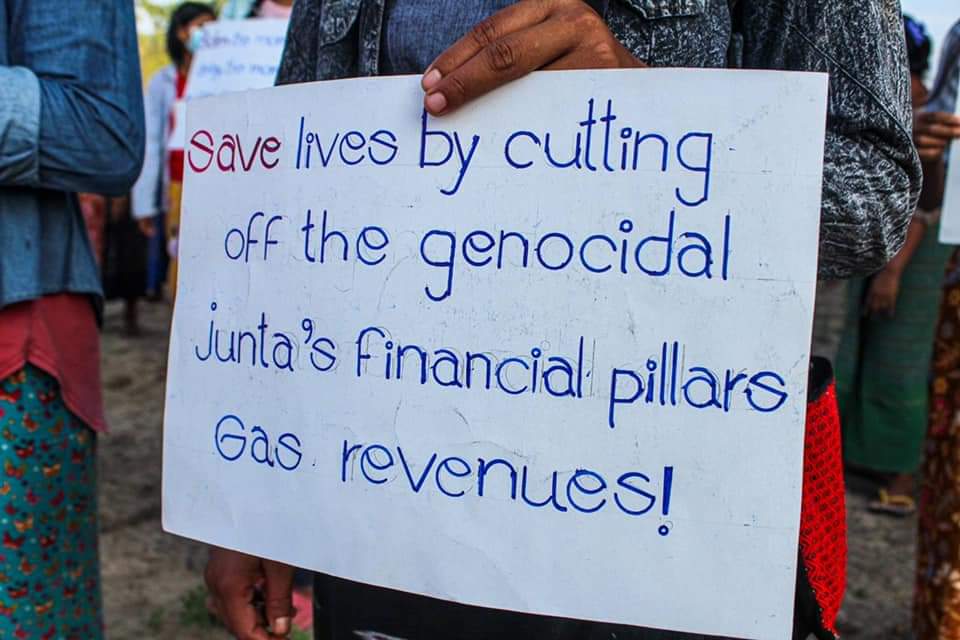
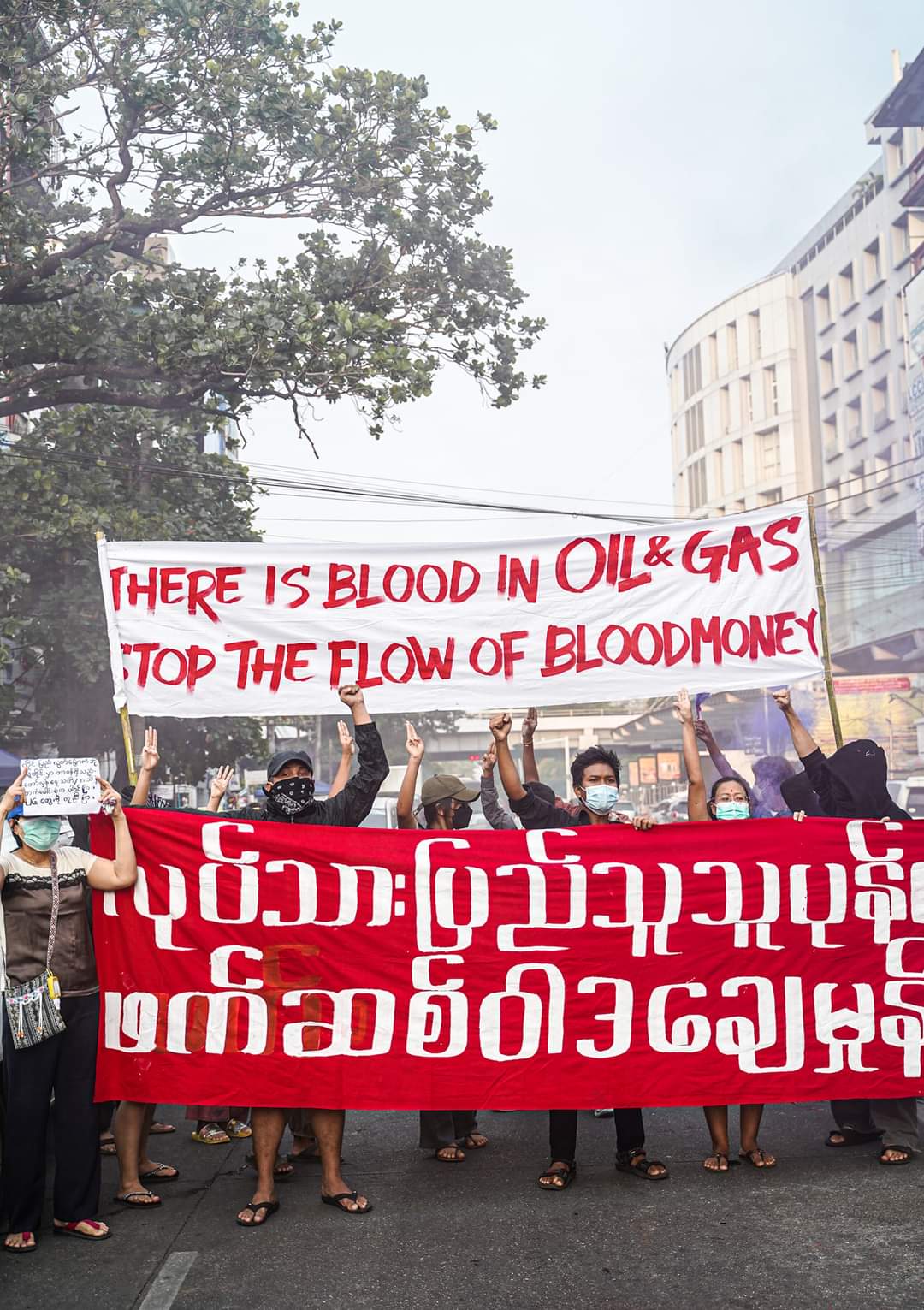
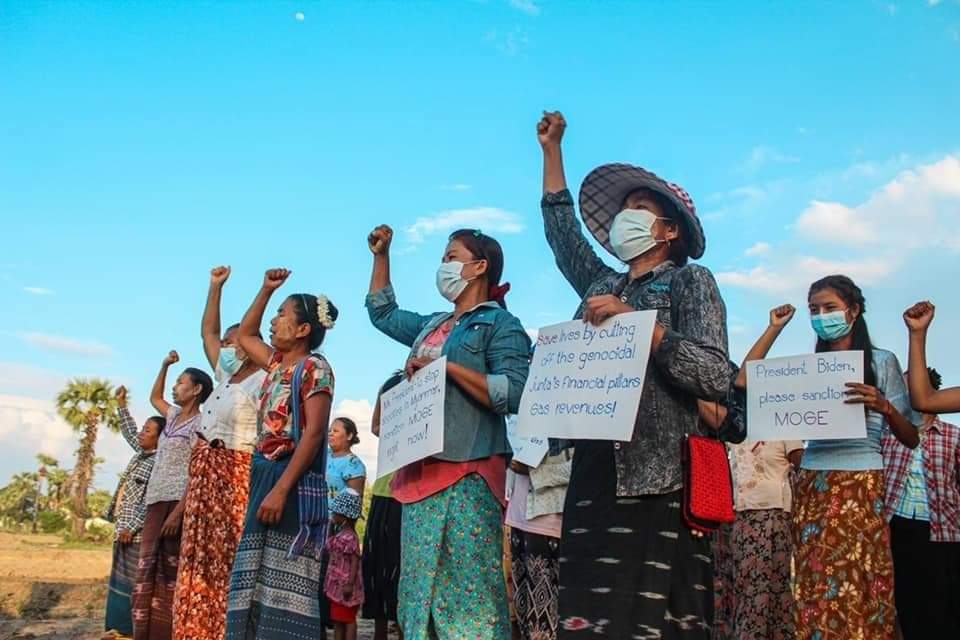
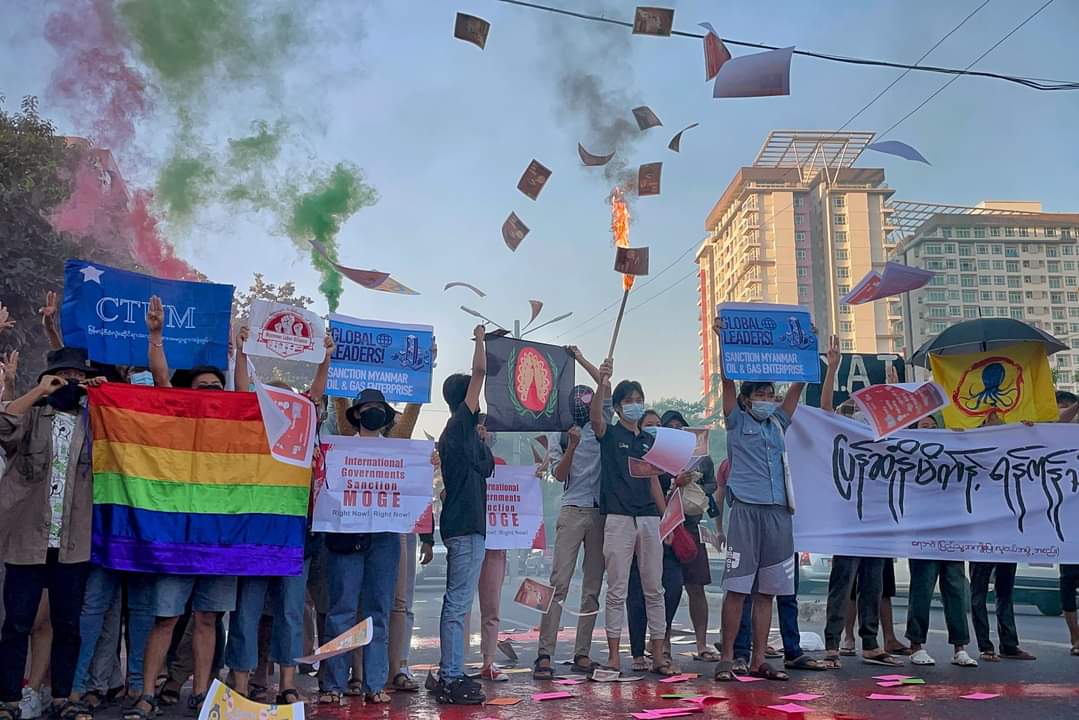
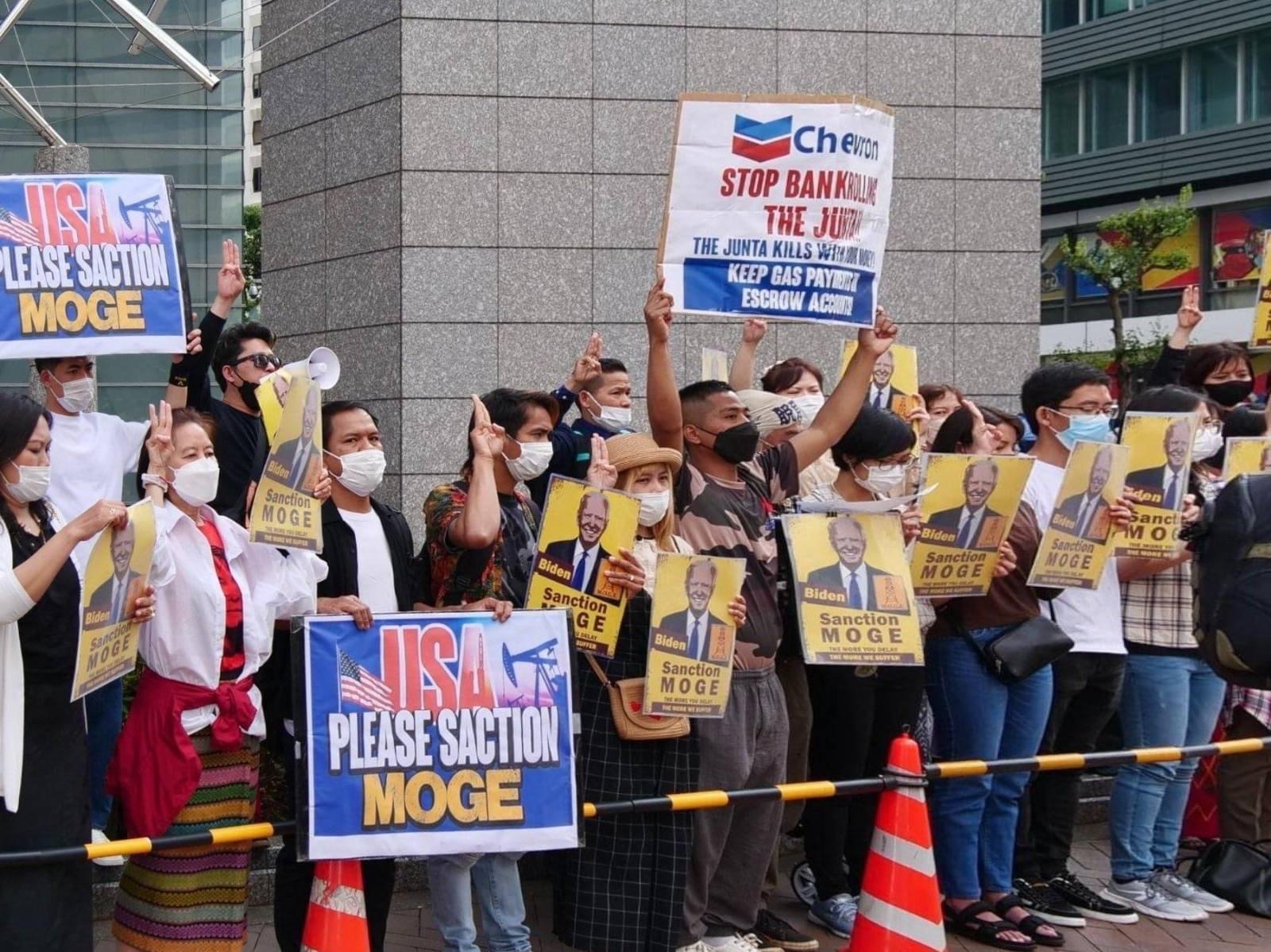
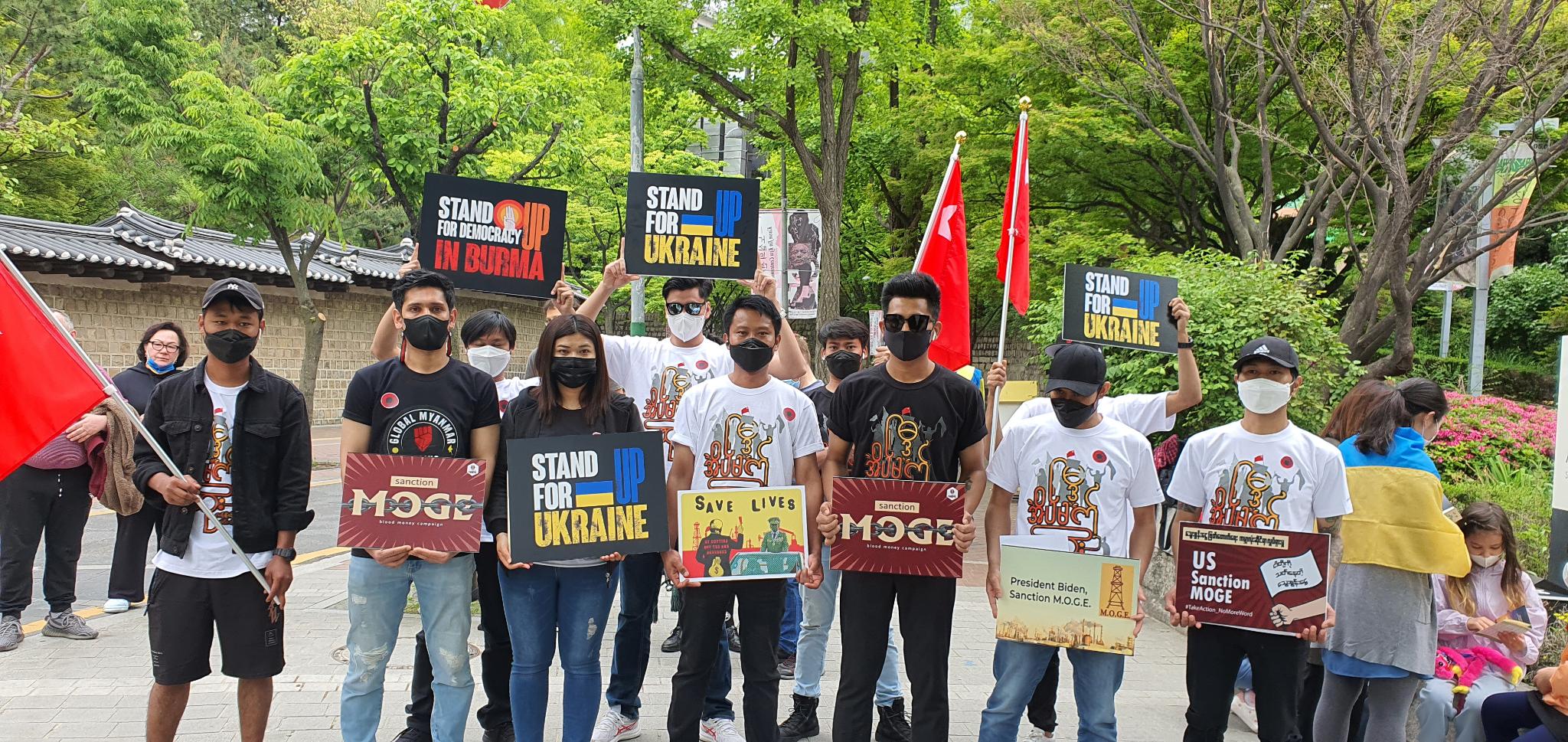
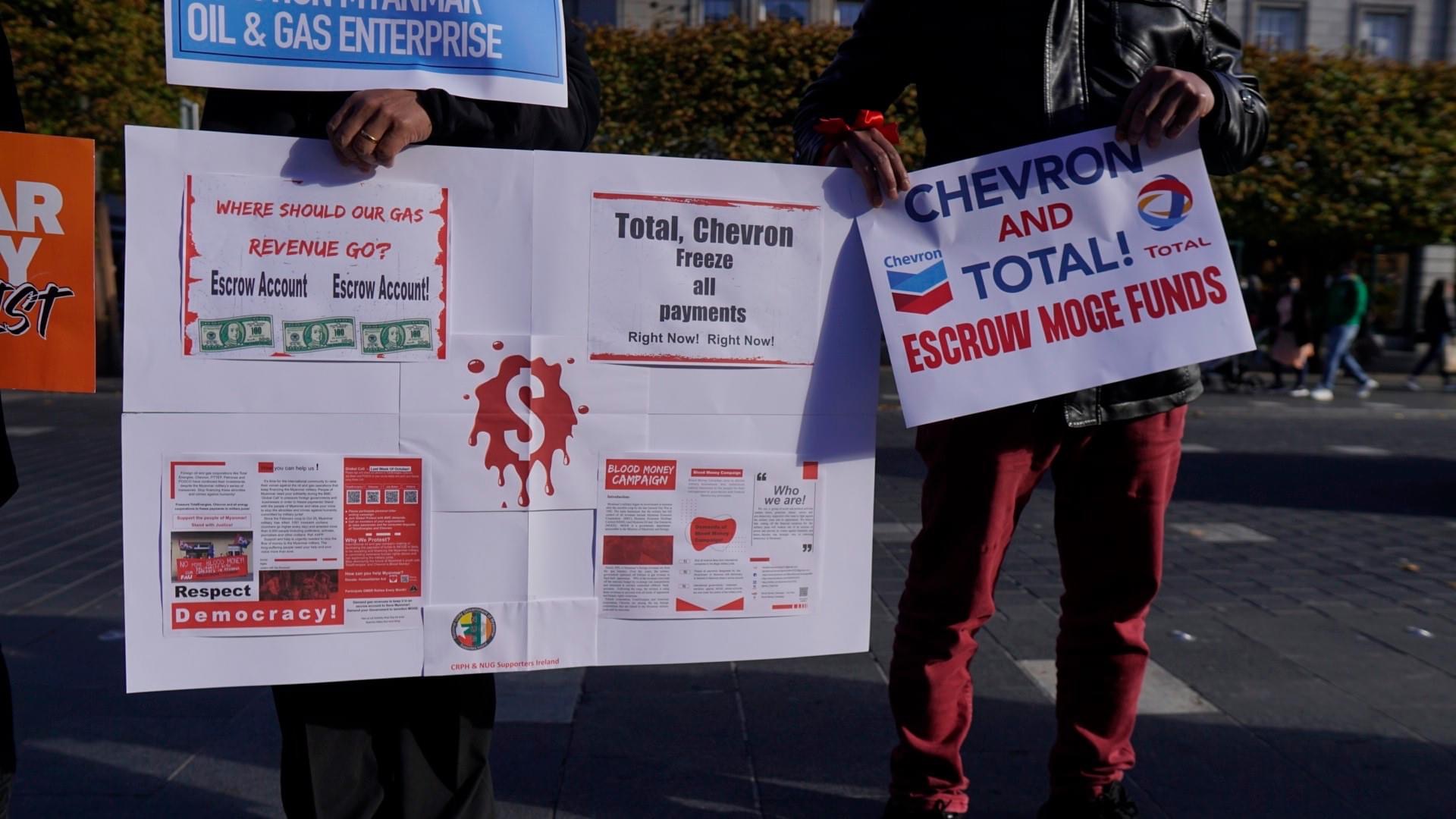
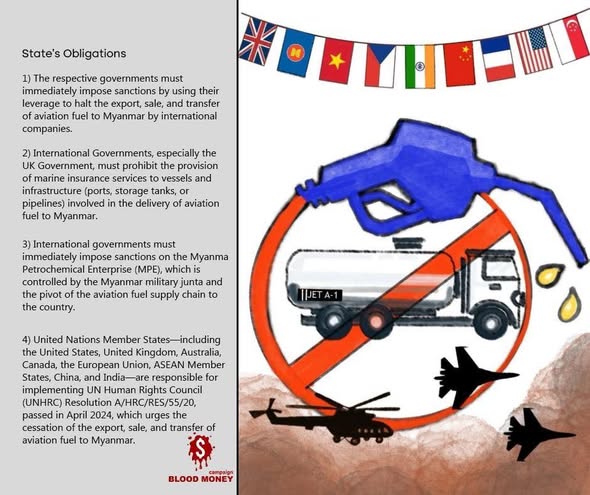
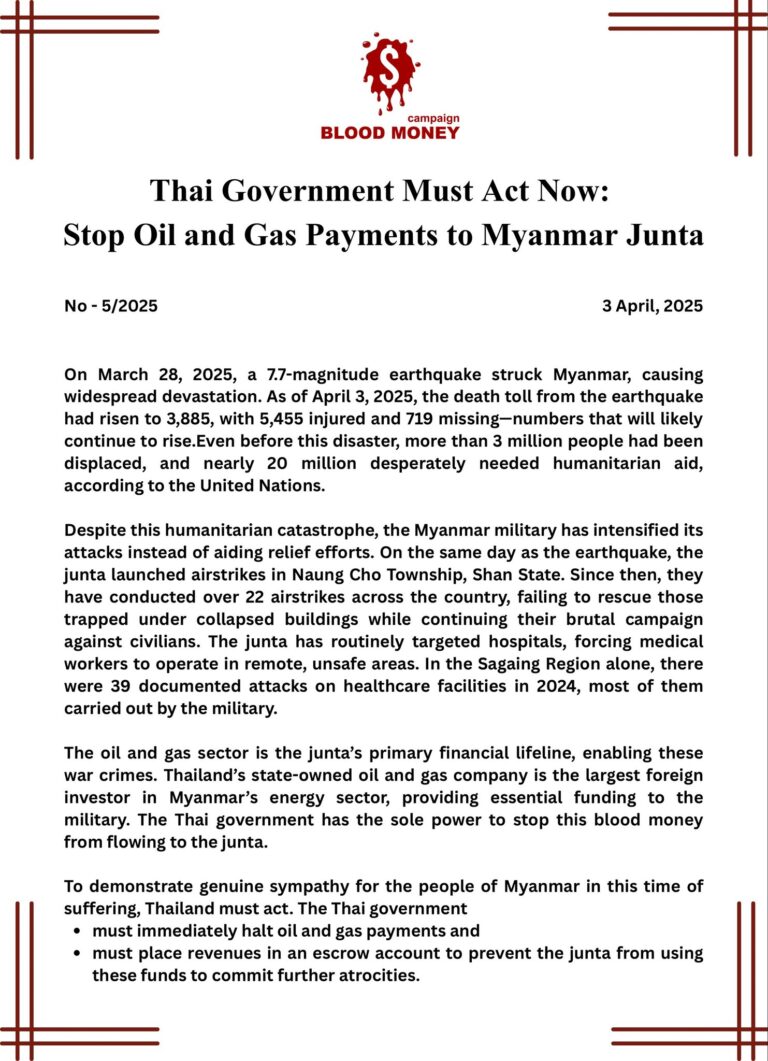
Myanmar Oil and Gas Enterprise (MOGE) sits at the core of the military junta’s economic power. While the junta monopolizes the national economy, the oil and gas sector remains its most critical source of foreign currency, providing the financial lifeline that sustains military rule and funds violence against the people of Myanmar.
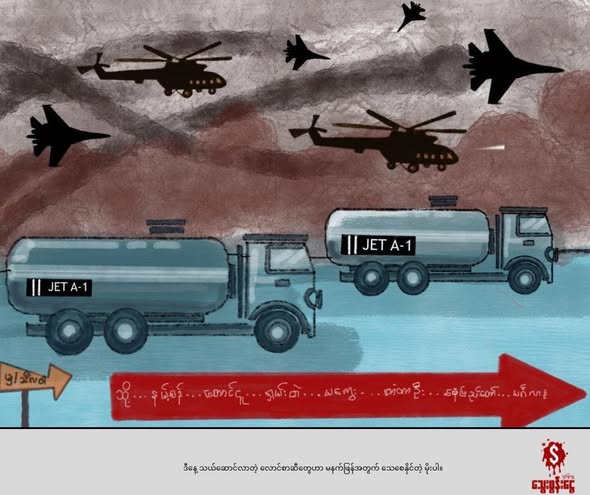
MOGE is the largest single source of foreign exchange available to the military, generating revenues through operations with five international oil and gas companies active in Myanmar. These funds enable the junta to purchase arms and ammunition on the international market—often the only officially viable channel for acquiring military equipment despite arms embargoes.
The military has controlled MOGE since its seizure of power in 1988. Even during the decade-long quasi-democratic period, MOGE remained completely opaque: no independent audits were permitted, and even the president was allowed to see only what the military chose to disclose. Today, the sector is fully and directly under the control of the fascist military regime.
Lessons from the Past
Myanmar’s history shows clearly that failing to sanction gas revenues entrenches dictatorship. For decades, no country or international government imposed sanctions on MOGE, allowing uninterrupted revenue flows that propped up military rule. Total Corporation, in particular, played a significant role in sustaining the regime during this period.
In 1988, a single company—Total—was making payments to the military-controlled gas sector. By 2021, five companies (Total, Chevron, PTTEP, POSCO, and Petronas) were collectively transferring revenues to MOGE, dramatically increasing the junta’s financial capacity.
Oil and Gas Revenues Fuel Militarization
MOGE’s revenues have long been used to modernize the military rather than meet public needs. In the early 2000s, gas sales from the Yadana project alone generated approximately USD 100 million annually for the junta. Thirty percent of this income—around USD 130 million—was reportedly used as a down payment for ten Russian-made MiG-29 fighter jets, while only USD 23.6 million was spent on healthcare nationwide, amounting to just USD 0.50 per person.
For the fiscal year 2007–2008, approximately 70% of Myanmar’s total foreign exchange earnings came from the oil and gas sector. These revenues did not improve living standards; instead, they strengthened the military’s capacity for repression.
Why Sanctioning MOGE Matters
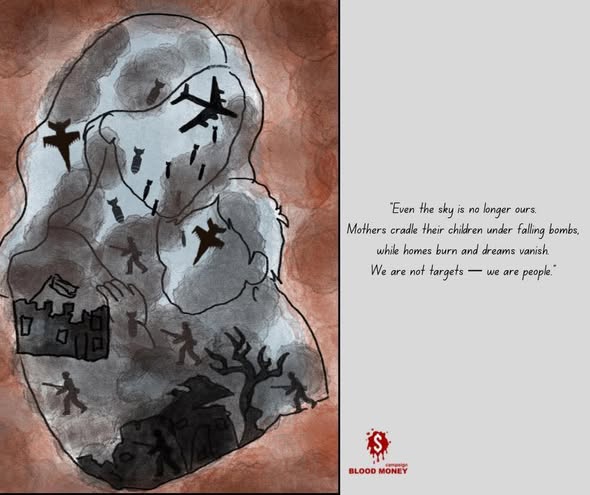
The junta’s ability to modernize its military and maintain power for more than 60 years has been directly linked to profits from international business—especially oil and gas. Past failures to sanction MOGE enabled dictatorship to survive and adapt. Continuing to allow these revenues to flow today repeats the same mistake, prolonging conflict, repression, and suffering.
Sanctioning MOGE is therefore not symbolic—it is strategic. Cutting off this revenue stream is one of the most effective ways to weaken the junta’s capacity to wage war against its own people.